
COPD
Chronic Obstructive Pulmonary Disease
Symptoms, common medications, and savings
Loading...
Medically reviewed by Carina Fung, PharmD, BCPPS on December 18, 2019
What is COPD?
Chronic obstructive pulmonary disease[1] (COPD) is a lung disease that damages your airways, causing difficulty breathing. COPD is a progressive disease, which means its symptoms worsen over time. As a result, you may not know that you have COPD until it progresses into the later stages. COPD is an umbrella term that describes a group[2] of different obstructive lung diseases, including emphysema and chronic bronchitis. Emphysema[3] is a condition that slowly destroys the lungs’ air sacs. Cigarette smoke and other irritants can damage the elasticity of these air sacs (their ability to stretch and shrink back to normal size). Chronic bronchitis occurs when the lining of the bronchial tubes (called bronchioles) becomes inflamed. Bronchioles carry air to and from the lungs’ air sacs. Swelling causes the bronchioles to narrow, which makes it harder for air to flow to and from the lungs. Bronchitis can also cause the lungs to produce excess mucus. A buildup of mucus further blocks the airways and can cause a chronic cough. Common COPD symptoms include coughing, buildup of mucus, shortness of breath, wheezing, and the feeling of tightness in the chest. Depending on its severity, the condition might make everyday activities[4], such as walking, difficult. COPD is not a contagious disease. Aside from smoking, other types of irritants can damage your lungs over time and lead to COPD, including air pollution, chemical fumes, or dust.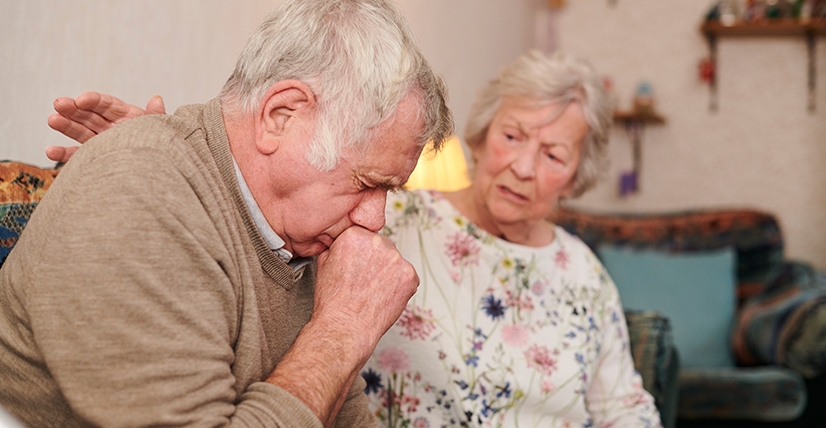
Source: Getty Images
How common is COPD?
Almost 15.7[5] million Americans (6.4%) reported that they have been diagnosed with COPD. However, the disease frequently goes undiagnosed. Cigarette smoking is the most common cause of COPD. 38%[6] of adults diagnosed with COPD report being current smokers. While there is no cure for COPD, the condition’s symptoms can be managed with proper treatment.COPD causes
Aside from smoking, COPD can also develop[7] as a result of respiratory infection, impaired lung growth, and exposure to workplace pollutants and lung irritants (such as fumes from heating and cooking in poorly ventilated homes). Other irritants that can cause COPD include secondhand smoke, pipe smoke, and air pollution. Approximately 20%[8] of smokers may develop COPD. Exposure[9] to secondhand smoke during childhood also increases the risk of developing COPD in adulthood. Up to 5%[10] of people with COPD may have alpha-1 antitrypsin deficiency, a genetic condition in which the body doesn't produce enough of a protein that protects the lungs and liver. Alpha-1 antitrypsin deficiency frequently goes undetected. The condition can only be diagnosed[11] through blood testing. People with this genetic condition, including children,[12] are particularly vulnerable to lung diseases like COPD. People with COPD that is related to alpha-1 antitrypsin deficiency can be treated by the same drugs that treat COPD in patients without the genetic condition. Additionally, they may be treated through augmentation therapy, which consists of weekly infusions[13] of the deficient protein.Risk factors for COPD
It’s important for you to recognize the risk factors that can increase your likelihood of getting COPD. Risks include:- Exposure to tobacco smoke: The more you smoke, the greater your risk of getting COPD. Exposure to secondhand smoke also contributes to the development of COPD.
- People with asthma who smoke: The risk of COPD increases further if you smoke and have asthma, a condition that inflames the airways.
- Occupational exposure to dust and chemicals: Long-term exposure to chemical fumes, vapors, and dust in the workplace can irritate and inflame your lungs.
- Age: COPD is more commonly diagnosed after the age of 45[14].
- Genetics: Alpha-1-antitrypsin deficiency is a genetic condition that causes some cases of COPD.
COPD symptoms
The symptoms of COPD can be difficult to recognize until the disease has already reached a late stage. Common signs and symptoms of COPD include:- Shortness of breath, especially during everyday activities
- Wheezing
- Chest tightness
- A daily cough that produces mucus (also called sputum or phlegm)
- Blueness of the lips or fingernail beds (cyanosis)
- Frequent respiratory infections
- Fatigue
- Swelling in ankles, feet, or legs
Complications from COPD
Some of the health complications that can result from having COPD include:- Respiratory infections: COPD can make you more vulnerable to colds, the fu, and pneumonia. Some of these infections can be prevented from regular vaccinations.
- Other chronic diseases[15]: COPD can increase your risk of getting asthma, heart disease, diabetes, stroke, and lung cancer. Depending on the diagnostic criteria used, between 40–70%[16] of lung cancer patients also have COPD.
- Depression: Dealing with a serious illness can contribute to the development of depression. Talk to your provider if you think that you may be experiencing depression.
COPD stages
Your provider will treat your COPD differently depending on its severity. There are many methods to determine the severity of your COPD. One of these is a test that measures how much air you breathe out in the first second of breath (forced expiratory volume in one second, or FEV1). Another test used to determine the level of your airway obstruction measures the greatest volume of air that you can exhale in a single breath (forced vital capacity, or FVC). The proportion of how much air you can breathe out in the first second of breath to how much air you can breathe out during a long, full breath is called the FEV1/FVC ratio. Your provider might use stages to describe how severe your COPD is. They will likely use the GOLD[17] (Global Initiative on Obstructive Lung Disease) system, which classifies COPD into four stages depending on your FEV1 /FVC ratio:- Mild (GOLD 1): FEV1 is greater than or equal to 80%
- Moderate (GOLD 2): FEV1 is 50–79%
- Severe (GOLD 3): FEV1 is 30-49%
- Very Severe (GOLD 4): FEV1 is less than or equal to 30%
Medications
- Ventolin (albuterol)
- Proair HFA (albuterol)
- Proventil (albuterol)
- Symbicort (breyna, budesonide / formoterol)
- Advair (fluticasone / salmeterol)
- Duoneb (ipratropium / albuterol)
- Atrovent HFA (ipratropium)
- Xopenex (levalbuterol)
- Xopenex HFA (levalbuterol)
- Spiriva Handihaler (tiotropium)
- Breo Ellipta (fluticasone furoate/vilanterol ellipta)
- Daliresp (roflumilast)
- Proair Respiclick
- Trelegy Ellipta
- theophylline ER
- terbutaline
- Breztri Aerosphere
- Anoro Ellipta (umeclidinium / vilanterol ellipta)
- acetylcysteine
- Spiriva Respimat
- Brovana (arformoterol)
- Incruse Ellipta (umeclidinium ellipta)
- Combivent
- Stiolto Respimat
- Perforomist (formoterol)
- Elixophyllin (theophylline)
- Theo-24
- Bevespi Aerosphere
- Tudorza Pressair
- Sski
- Duaklir Pressair
- Yupelri
- prednisone DR
- Serevent
- Striverdi Respimat
- Ohtuvayre
Related Conditions
Acute Bronchitis
A type of short-term bronchitis caused by inflammation of the bronchi (airways in the lungs)....
ARDS
Acute Respiratory Distress Syndrome
A condition in which fluid collects in the lung’s air sacs, making less oxygen reach your bloodstream....
Asthma
A condition in which respiratory airways narrow and swell, producing extra mucus. This can make breathing difficult and ...
Pneumonia
Lung inflammation caused by a bacterial or viral infection in which air sacs fill with pus. In severe cases, pneumonia c...