
Whooping Cough
Pertussis
Symptoms, common medications, and savings
Loading...
Medically reviewed by Carina Fung, PharmD, BCPPS on October 31, 2019
What is whooping cough?
Whooping cough[1], or pertussis, is a highly contagious respiratory tract infection. This infection is caused by bacteria known as Bordetella pertussis_ and causes uncontrollable, violent coughing.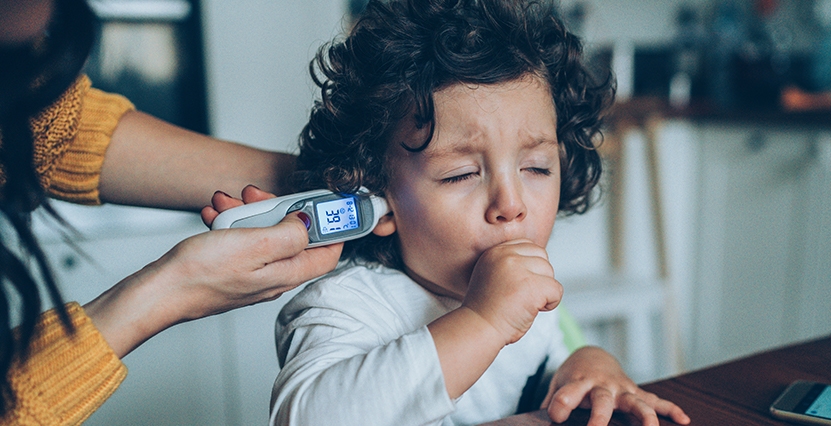
Source: Getty Images
Whooping Cough Symptoms
These coughing fits often make it hard to breathe and are followed by a sharp intake of breath that causes a “whooping” sound—hence the name “whooping cough.” Whooping cough was considered to be a childhood disease prior to the development of the pertussis vaccine[2]. Whooping cough can be serious—even deadly—in babies younger than one year old. While it can affect people of all ages, pertussis now primarily affects children who are too young to receive the full course of whooping cough vaccines, as well as teens and adults with compromised or declining immune systems. Deaths associated with whooping cough are rare and most commonly occur in infants. That’s why is vital that pregnant women and other people who come into close contact with infants be vaccinated against the disease.How common is whooping cough?
There are an estimated 24.1 million reported cases[3] of pertussis per year. Of these, roughly 160,700 cases of pertussis result in death. According to the CDC, in 2012 (the most recent peak year for pertussis) there were 48,277 cases[4] of whooping cough reported in the United States—the largest number since 1955. The number of cases of whooping cough in the U.S. has increased since the 1980s, while in 2010, the CDC saw an increase in reported cases among 7–10-year-old children.Whooping cough symptoms
Early symptoms of whooping cough[5] can last for 1–2 weeks. In time, the disease develops, and symptoms become more severe. Some coughing fits caused by pertussis infection can last for 10 weeks or more. This is why some people call whooping cough “the 100-day cough.”Early-stage pertussis symptoms
Whooping cough usually begins with cold-like symptoms and may be accompanied by a mild cough or low-grade fever[6]. While coughing in babies may be minimal or nonexistent, some babies may show a symptom called apnea, a pause in his or her breathing pattern. It takes about 7–10 days after infection for the signs and symptoms of pertussis to appear. Because these symptoms often resemble those of the common cold[7], your healthcare provider may not immediately identify them as being caused by pertussis until more severe symptoms develop. The early symptoms of whooping cough can last for 1–2 weeks, and generally include:- Runny nose
- Nasal congestion[8]
- Red, watery eyes
- Low-grade fever (usually remains minimal throughout the duration of the illness)
- Mild, occasional cough
- Apnea (a pause in breathing) in babies
Late-stage pertussis symptoms
Between 1–2 weeks after the first symptoms of whooping cough appear, the disease progresses, and symptoms become more severe. Late-stage pertussis causes fits of multiple, rapid coughs brought on in response to the accumulation of thick mucus inside your airways. This coughing is characteristically followed by a high-pitched intake of breath and a “whooping” sound. The severe coughing fits that occur with pertussis can:- Provoke vomiting (throwing up)
- Cause you to go red or blue in the face
- Cause extreme fatigue and exhaustion
- Vomiting
- Turning red or blue
- Seeming to struggle to breathe or having noticeable pauses between breaths
- Inhaling with a whooping sound
Whooping cough causes
Whooping cough is caused by an infection with the bacteria Bordetella pertussis. The transmission[9] of whooping cough occurs when the bacteria are spread from an infected person to others (person-to-person contact).Bordetella pertussis
Bordetella pertussis bacteria enter your body through your mouth, eyes, or nose. When someone infected with pertussis coughs or sneezes, tiny bacteria-laden droplets are sprayed into the air. You can catch whooping cough by inhaling these particles or by touching droplets left behind on surfaces touched by someone who is infected. The likelihood of catching whooping cough increases in crowded places like schools, daycare centers, public transportation, or workplaces. Because whooping cough is often spread through large groups of people in close contact, the beginning of the school year can present a higher risk of you or your child contracting the illness. If you think you or your child has pertussis, avoid going into public places and spreading the infection to others.Risk factors for whooping cough
Because the whooping cough vaccine you receive as a child eventually wears off, most teens and adults are left susceptible to the infection during an outbreak. Because there continue to be regular outbreaks of whooping cough[10] it's important that you and your children stay up-to-date on all pertussis vaccines. Babies younger than 12 months of age who are unvaccinated or who haven’t received the full course of recommended vaccines have the highest risk for severe complications and death.Complications from whooping cough
Whooping cough can cause serious and, in some cases, deadly complications[11] in babies and young children—especially if they have not received all recommended pertussis vaccines. Roughly half of babies younger than 1 year of age that catch whooping cough are hospitalized. The younger a baby is, the more likely that he or she will need to receive treatment in a hospital. According to the CDC[12], of the babies hospitalized with whooping cough, approximately:- 1 out of 4 (23%) get pneumonia (lung infection).
- 1 out of 100 (1.1%) will have convulsions (violent, uncontrolled shaking).
- 3 out of 5 (61%) will have apnea (slowed or stopped breathing).
- 1 out of 300 (0.3%) will develop encephalopathy (disease of the brain).
- 1 out of 100 (1%) will die as a result of the illness or associated complications.
- Weight loss in 1 out of 3 (33%) adults
- Loss of bladder control in 1 out of 3 (28%)
- Passing out in 3 out of 50 (6%) adults
- Rib fractures from severe coughing in 1 out of 25 (4%) adults